Wednesday, 12 November 2008

Mitch Mitchell

Mitch Mitchell
(9 de Julio de 1947 - 12 de noviembre de 2008)


(Reuters) - Mitch Mitchell, un baterista pionero conocido por trabajar durante la década de 1960 con el ícono del rock Jimi Hendrix, falleció el miércoles a los 62 años.
Mitchell fue encontrado sin vida en su cuarto de hotel en Portland, Pregón. Un portavoz del forense del condado de Multnomah señaló que al parecer Mitchell habría muerto por causas naturales.
El baterista se encontraba en Portland para la última parada en su gira por 18 ciudades de Estados Unidos junto a Experience Hendrix, una serie de conciertos que conmemoran el legado de la fallecida estrella del rock.

MITCH MITCHELL Drum Solo Sweden, January 9, 1969.


"Estamos todos devastados tras enterarnos de la muerte de Mitch. El era un hombre maravilloso, un músico brillante y un verdadero amigo", dijo la hermana de Hendrix, Janie Hendrix, en un comunicado.
"Su papel en la formación del sonido de Jimi Hendrix Experience no puede ser subestimado", añadió. "Durante el transcurso de la última gira, se veía dichoso por el intercambio entre otros músicos y el público. No hay duda que amaba lo que hacía", se leía en el texto.
Mitchell, quien nació en Gran Bretaña, comenzó en el mundo del espectáculo como un niño actor, pero abandonó la actuación por su amor verdadero, la música de jazz y el rock.
Baterista de alto perfil, Mitchell se unió a Jimi Hendrix Experience en 1966 y acompañó al guitarrista en su legendaria actuación en Woodstock tres años después. Tocó en clásicos de Hendrix tales como "Fire", "Manic Depression" y "Third Stone from the Sun."
Mitchell también ha sido nombrado como un apoyo en el desarrollo del estilo de batería conocido como "fusión", que combina el rock con el jazz y que está influenciado por gigantes de ese estilo como Elvin Jones y Max Roach.
El estilo convirtió a la batería en un instrumento primordial, un concepto innovador del rock and roll.
Hendrix -un compositor, guitarrista y animador- fue un pionero en la década de 1960 del rock psicodélico y falleció en septiembre de 1970, a los 27 años.


Mitch Mitchell Fue baterista de Jimi Hendrix, (The Jimi Hendrix Experience).
Fue uno de los más influyentes bateristas entre finales de los años 60 y comienzo de los años 70. Se destacó con su trabajo, junto a la banda The Jimi Hendrix Experience, y consagrado por su legendario trabajo en canciones como Maniac Depression y Third Stone From the Sun. Mitch puso una fuerte influencia de jazz y asimismo como muchos bateristas de la época, fue fuertemente inspirado por su labor con Elvin Jones. Siguió en su dinamismo, dando también un estilo al grupo, y fue dada la libertad de innovar junto con Jimi Hendrix, en mantener sus melodías firmes y sólidas.

Mitch inició con un estilo de tocar, el cual sería llamado más tarde como fusión. En 1966, este impresionante e innovador estilo de tocar nunca había oído antes en el Rock. Entonces, siiempre se utilizó una batería como instrumento de segundo plano junto con el bajo. Junto con el estremecedor sonido de la guitarra y canciones de Jimi Hendrix. Mitch tocó y ayudó a definir el Rock.

En 1968 participa en el especial de televisión "The Rolling Stones Rock and Roll Circus" como baterísta de The Dirty Mac, un supergrupo formado por John Lennon, Eric Clapton y Keith Richards, donde interpretan la canción Yer Blues.

Mitch era el más importante colaborador musical de Jimi Hendrix, tocando en el trío The Jimi Hendrix Experience, en Octubre de 1966, hasta 1969. Siendo esta su banda en Woodstock en Agosto de 1969, y también la banda Cry of Love, en 1970. Jimi Hendrix podría eventualmente grabar piezas en estudio junto con Mitch, más durante las presentaciones complementadas en otra forma más sobresaliente.

Después de la muerte de Jimi Hendrix, Mitch (junto con el ingeniero Eddie Kramer), finalizó una producción de trabajo de varias grabaciones incompletas de Jimi Hendrix, que resultó en un álbum inédito lanzado con el nombre de Cry of Love y Rainbow Bridge. En 1972, se unió a dos guitarristas, April Lawton y Mike Pinera para formar Ramatam. Grabaron un álbum que abrirán el espectáculo para ELP en varios conciertos. Irónicamente, Mitch había sido invitado a tocar en ELP, en 1970, pero declinó en favor a tocar con Jimi Hendrix. Mitch también hizo algunos trabajos con Terry Reid, Jack Bruce y Jeff Beck (sustituido Cozy Powell, ya que estaba enfermo).

A finales de los años 70 y hasta los años 90, Mitch poco sobresalió, haciendo trabajos eventuales(como el álbum Long Walk Home, de Junior Brown), y también participando en varios videos y entrevistas relacionadas a Jimi Hendrix. Recientemente, fue parte de la banda Gypsy Sun Experience, junto con su antiguo bajista de Jimi Hendrix, Billy Cox y el guitarrista Gary Serkin. Actualmente vivia en Europa.

Donald Byrd

Donald Byrd - At the Half Note Cafe, Vols. 1-2 (1960)


DISC 1:

01. Introduction by Ruth Mason Lion 1:21
02. My Girl Shirl (Pearson) 10:32
03. Soulful Kiddy (Byrd) 10:06
04. Portrait of Jennie, A (Burdge, Robinson) 6:49
05. Cecile (Byrd) 12:52
06. Theme (Pure D. Funk) (Byrd) 1:53
07. Child's Play - (bonus track) (Byrd, Pearson) 8:42
08. Chant - (bonus track) (Pearson) 11:05


DISC 2:

01. Jeannine (Brown, Pearson) 13:09
02. Pure D. Funk (Byrd) 6:15
03. Kimyas (Byrd) 11:58
04. When Sunny Gets Blue (Fisher, Segal) 6:22
05. Between the Devil and the Deep Blue Sea - (bonus track) (Arlen, Koehler) 9:56
06. Theme From Mr. Lucky - (bonus track) (Mancini) 10:52


Donald Byrd (trumpet)
Pepper Adams (baritone saxophone)
Duke Pearson (piano)
Laymon Jackson (bass)
Lex Humphries (drums).

McCoy Tyner

McCoy Tyner - Supertrios (1977)


01.Wave
02.Blues On The Corner

03.I Mean you
04.The Greeting
05.Prelude To A Kiss
06.Moments Notice
07.Hymn-Song
08.Consensus
09.Four By Five
10.Stella By Starlight
11.Lush Life
12.Blues For Ball

McCoy Tyner - piano
Ron Carter - bass (tracks 1-5)
Eddie Gomez - bass (tracks 6-10)
Tony Williams - drums (tracks 1-5)
Jack DeJohnette - drums (tracks 6-10)

Monday, 10 November 2008

Chucho Valdes

Chucho Valdes - Live at the Village Vanguard (1999)


1.Anabis
2.Son XXI (Para Pia)
3.Punto Cubano
4.My Funny Valentine
5.To Bud Powell
6.Drume Negrita
7.Como Traigo la Yuca
8.Ponle la Clave
9.Encore-Lorraine's Habanera.


Chucho Valdes (piano)
Mayra Caridad Valdes (vocals)
Francisco Rubio Pampin (acoustic bass)
Raul Pineda Roque (drums)
Roberto Vizcaino Guillot (congas, bata drums)

Miriam Makeba

"Hasta Siempre Mama África"
(gracias por toda tu lucha y amor que nos dejaste)


Empezó su Farewell tour el año pasado en su ciudad natal, Johanesburgo, y dirá esta noche su adiós a los escenarios españoles en Barcelona, con un concierto en el Palau de la Música Catalana incluido en la programación del Festival de Milenio. ¿El día que definitivamente dejará de cantar? Todavía no ha podido poner fecha. "Intento decir adiós desde hace un año, pero me está costando. Cada vez que llego a casa, alguien me pide que dé un concierto más. Y la verdad es que ya no soy joven. Llevo 50 años sobre el escenario y viajar me cansa mucho. ¿Que qué haré? Me dedicaré al hogar para niñas que tengo en Suráfrica. Ellas son el futuro de mi país".

La vieja Makeba, como ella se presenta, parecía ayer cansada. Su franca y abierta sonrisa de otros tiempos apenas era un leve esbozo que parecía disimular cansancio y dolor -andaba con dificultad apoyada con una muleta-. Pero pese a los años y los achaques, Mama África no ha perdido ni un ápice del carisma que convirtió su voz en sinónimo de la libertad africana. Fue, y lo sigue siendo, una incansable guerrera por la paz y contra el racismo. Ese racismo que en 1960 le costó un exilio forzoso de 31 años al prohibirle el régimen surafricano del apartheid la entrada a su país tras una gira.

"Nunca he olvidado de dónde vengo. Desde joven tuve la determinación de no mirar nunca atrás. Nosotros, los surafricanos, fuimos los últimos en conseguir la libertad en África. Luchamos contra un régimen de apartheid y lo conseguimos. Ahora somos libres, pero nuestra libertad es relativa, porque económicamente hay mucha represión. Y mi lucha nunca terminará hasta que todos seamos realmente libres".

Su compromiso con la libertad del país que la vio nacer y, por extensión, de todo el continente africano alimenta a Miriam Makeba. Ayer por la tarde, recibió en Mataró (Barcelona) el Premio por la Paz 2007 que concede desde hace 28 años la asociación para las Naciones Unidas en España. Premio que le ha sido concedido por su defensa de las libertades y la igualdad.

Esta noche, sobre el escenario del Palau de la Música de Barcelona, le cantará a África y a la libertad, porque dice que "cantar hace feliz". En el repertorio, viejas canciones, entre las que no faltará su célebre Pata pata, y nuevos temas de su último disco, el 31º de su dilatada carrera. Ayer, como aperitivo, sorprendió a los periodistas al cantarles al final de su encuentro, a cappella y con una lágrima surcando su mejilla izquierda, su triste y bella balada Oh, so alone.


Fallece Miriam Makeba, la voz que combatió el apartheid.

ROMA (AFP) — La cantante sudafricana Miriam Makeba, de 76 años, conocida en todo el mundo como 'Mama África' falleció en Italia en la madrugada de este lunes de paro cardíaco tras un concierto a favor del escritor Roberto Saviano, amenazado de muerte por la mafia.

Voz legendaria del continente africano y símbolo de la lucha contra el régimen del apartheid, Miriam Makeba se sintió mal después de haber cantado media hora durante un concierto dedicado al joven autor del libro antimafia 'Gomorra' en la localidad de Castel Volturno, cerca de Nápoles (sur).

"Fue la última en salir al escenario, después de otros cantantes. Hubo un bis y en ese momento alguien preguntó si había algún médico entre el público. Miriam Makeba se había desmayado y estaba en el suelo", contó un fotógrafo de AFP.

Trasladada rápidamente a una clínica de Castel Volturno, falleció más tarde a resultas de un paro cardíaco, según la prensa italiana.

La muerte de la reconocida cantante conmovió al continente africano, que llora a una de las figuras más destacadas de la lucha contra la segregación racial.

"Era la primera dama de la canción sudafricana y merecía el título de Mama África. Era la madre de nuestra lucha y de nuestra joven nación", lamentó Nelson Mandela, icono de la lucha contra el régimen segregacionista, premio Nobel de la Paz y primer presidente negro de la República Sudafricana.

"Murió haciendo lo que mejor sabía hacer, enviar un mensaje positivo con el canto", recalcó el ministro de Relaciones Exteriores Sudafricano, Nkosazana Dlamini Zuma.

El Gobierno sudafricano rindió un verdadero homenaje a la cantante, que calificó como "una de las mayores artistas de nuestra época".

"Es una enorme pérdida para África, para la música africana y para la toda la música, porque con su talento logró que su música se escuchara en todo el mundo en una época en que ello era muy difícil", comentó desde Dakar el célebre cantante senegalés Youssou Ndour.

Autoridades de todo el mundo lamentaron la muerte de la cantante, entre ellas el Gobierno francés, que le otorgó el pasaporte en 1991 para que pudiera regresar a su país tras 31 años de exilio.

"Era el símbolo de la resistencia. De la resistencia al apartheid, un régimen que golpeó duramente a su familia y hoy en día a las injusticias y desigualdades del continente africano", comentó Bernard Kouchner, ministro de Relaciones Exteriores francés, en una nota divulgada a la prensa.

Miriam Makeba, que nació el 4 de marzo de 1932 en Johannesburgo, había aceptado participar en el concierto italiano dedicado a la lucha de Roberto Saviano acompañada por sus siete músicos.

Makeba había visto cómo se volcaba el destino de su país en 1947 con la llegada al poder de los nacionalistas afrikáners. A los 27 años se marchó de Sudáfrica por necesidades de su carrera, tras lo cual se le prohibió la entrada en el país por su compromiso con la postura antiapartheid.

Fue un exilio que la llevó a vivir en diferentes lugares de Europa y Estados Unidos. La cantante tenía mucho éxito, aunque su matrimonio en 1969 con el líder de los Black Panthers Stokely Carmichael, del que se separó en 1973, no acabó de gustar a las autoridades norteamericanas, que la forzaron a emigrar a Guinea.

Después de la muerte de su hija única en 1985, volvió a vivir a Europa, pero en 1990, Nelson Mandela consiguió convencerla de que regresase a Sudáfrica.

Miriam Makeba recibió un premio de la Orden francesa de las Artes y las Letras en 1985 y en 1990 recibió la nacionalidad francesa.

El cuerpo de la cantante, que no será sometido a autopsia alguna, será repatriado en avión a la República Sudafricana, indicaron fuentes judiciales italianas.


Homeland


01. Africa Is Where My Heart Lies
02. Amaliya
03. Cause We Live for Love
04. Homeland
05. In Time
06. Lindelani
07. Liwa Wechi
08. Masakhane
09. Pata Pata 2000
10. Umhome

Sunday, 9 November 2008

Pat Metheny

Pat Metheny - More Travels (1992)DivX


1. Opening
2. Have You Heard
3. First Circle
4. Are You Going With Me
5. Letter From Home
6. Half Life Of bsolution
7. The Road To You
8. Third Wind
9. Letter From Home


The Pat Metheny Group filmed live in concert between July 29,and August2,1991.
Pat Metheny, guitars; Lyle Mays, keys; Steve Rodby, bass; Paul Wertico, drums; Pedro Aznar, guitar, vocals, percussion; and Armando Marcal, percussion.

Chad Wackerman

Chad Wackerman - Legs Eleven (2004)


01-Sophie's Beach
02-Spiral
03-Legs Eleven
04-Where You Come From
05-Newtown
06-No Time Like The Future
07-Field Of Mars
08-Tangara
09-Rhythm Clock
10-Balancing Acts.


James Muller (gtr).Leon Gaer (bs) and Daryl Pratt (elec.vibes)

'Legs Eleven' is the latest CD from electric jazz drummer Chad Wackerman.(Chad has played with Frank Zappa, Allan Holdsworth, Andy Summers, Steve Vai, James Taylor and John Patitucci among many others).The project was composed and recorded in Chad's second homeland Australia, and is a reflection of the time he has spent in the country. Featuring Chad's urgent and exciting drumming, the CD has an openess which echoes the Australian landscape. 'It's very hard for me to separate the music I play with the way I feel and my surroundings - especially music that has improvisational elements in it', Chad says. The musicians involved in the project have been playing together as an ensemble for the past seven years. James Muller is one of Australia's finest young guitarists, Leon Gaer on bass is a studio heavyweight who originally hails from L.A. and Daryl Pratt, the electric vibraphonist, is a highly regarded jazz and classical percussionist. 'Legs Eleven', with its percussive edge, rewards the listener with an intense and exhilarating experience.

Jorge Dalto

Jorge Dalto - Listen Up (1978)


1. Listen Up
2. Samba All Day Long
3. Concentrate on You
4. Sky
5. Spanish Harlem
6. Costa
7. Girl in Blue.


JORGE DALTO - Acoustic Piano
STANLEY BANKS - Bass Guitar
ANTHONY JACKSON - Bass Guitar
HARVEY MASON - Drums
GEORGE BENSON - Guitar
PHILLIP UPCHURCH - Guitar
FRANK MALABE - Percussion
RANDY BRECKER - Trumpet & Flugelhorn
MICHAEL BRECKER - Trumpet & Flugelhorn
HUBERT LAWS - Flute
RONNIE FOSTER - Synthesizers.


Pianist Jorge (HorHay) Dalto's style was a blend of his experience with the music of his native country, Argentina, and the jazz of America. He had been playing since he was five and began his professional career at the age of fifteen. Jorge s mellow style had been part of George Benson's band since 1975. He appears on Benson's three platinum albums, BREEZIN, IN FLIGHT and WEEKEND IN L.A., and the Grammy-winning MASQUERADE single. After numerous sessions with other key artists, Jorge worked to establish himself as a key artist on Versatile Records.
Born July 8,1948 in Rogue Perez, 100 miles north of Buenos Aires, Jorge was encouraged into music by his father, Eliseo, a noted bandleader. Tuning in the radio at every opportunity to such artists as Louis Armstrong and Dizzy Gillespie. Other early influences included Oscar Peterson, Bill Evans, Herbie Hancock and Bud Powell. After a brief career as a professional musician in Argentina and a year in the Army, Jorge moved to Chicago. He joined a latin quintet, listened, played and learned.Two years later he moved to New York, where all the action was, and played with the latin bands of Machito and Tfto Puente. He performed on the albums YESTERDAYS with Gato Barbieri and AFRO CUBAN MOODS with Machito and Dizzy Gillespie. In 1977, Jorge recorded his own album CHEVERE which translates loosely into beautiful, nice, groovy. Other recordings include appearances on the Grant Green Eas-/ and Joyce Leftenant IT'S TOO LATE! as well as albums by Harvey Mason and Phil Upchurch. In 1987 Jorge died of cancer at the age of 39. He passed away in his sleep after a long bout with the disease, which had kept him away from the music scene for more than a year.

Lalo Schifrin

Lalo Schifrin - Black Widow (1976)


01-Black Widow
02-Flamingo
03-Quiet Village
04-Moonglow/Theme from "Picnic"
05-Jaws
06-Baia
07-Turning Point
08-Dragonfly
09-Frenesi
10-Tabú
11-Baia [alternate take/#]
12-Con Alma.


Pepper Adams - Sax (Baritone),Don Alias - Percussion, Conga,Wayne Andre - Trombone
Patti Austin - Vocals, Vocals (bckgr),Carter Collins - Percussion,Sue Evans - Percussion,Jon Faddis - Trumpet,Joe Farrell - Flute, Sax (Alto),Jerry Friedman - Guitar,Eric Gale - Guitar
Paul Gershman - Violin,Emanuel Green - Violin,Anthony Jackson - Bass,Harold Kahon - Violin,Hubert Laws - Flute,Charles Libove - Violin,Harry Lookofsky - Violin
George Marge - Flute,Carlos Martin - Conga,David Nadien - Violin,Andy Newmark - Drums
Matthew Raimondi - Violin,Barry Rogers - Trombone,Lalo Schifrin - Arranger, Conductor, Keyboards,Clark Spangler - Keyboards,Creed Taylor - Producer,John Tropea - Guitar.

Saturday, 8 November 2008

John Lenwood (Jackie) McLean

John Lenwood (Jackie) McLean (1931-2006)


John Lenwood (Jackie) McLean (Nueva York, 17 de mayo de 1931 – 31 de marzo de 2006; algunas fuentes señalan a 1932 como su año de nacimiento) fue un saxofonista (alto), compositor y educador estadounidense de jazz.
Su padre, John Sr., que murió en 1939, tocaba la guitarra en la orquesta de Tiny Bradshaw; tras su muerte, su educación musical fue continuada por su padrino, por su padrastro, propietario de una tienda de discos, y por varios profesores notables. Recibió también enseñanzas de vecinos como Thelonious Monk, Bud Powell y Charlie Parker. En su etapa en el instituto tocó en una banda con Kenny Drew, Sonny Rollins y Andy Kirk Jr. (el saxofonista tenor hijo de Andy Kirk).

Virtuoso del saxo alto, Jackie McLean (New York, 1932) tuvo en su casa la oportunidad de dedicarse a la música dado que su padre era guitarrista en el grupo de Tiny Bradshaw. Alumno de Bud Powell, con quien tuvo el privilegio de tocar en el mítico "Birland" en 1949, tuvo ocasión de colaborar con Sonny Rollins, Thelonious Monk, Kenny Drew y el hijo de Andy Kirk.

En 1951 trabajó con Miles Davis, con quien tuvo la oportunidad de debutar discográficamente. Entre 1955 y 1958 tocó con Charles Mingus, y con los "Jazz Messengers" de Art Blakey. Con esa magnifica preparacion, dio el paso de constituir su propio grupo en el que formaron inicialmente, Ray Draper, Mal Waldron, Doug Watkins, Art Taylor y ocasionalmente, Bill Hardman. Durante los años sesenta su trabajo tuvo unas connotaciones mas modernistas y pasó de un planteamiento netamente parkeriano, a una evolución mas propia del hardbop. Colaboró con el maestro, Ornette Coleman, con quien publicó un legendario álbum con Ornette tocando la trompeta: "New And Old Gospel", (Blue Note, 1967).

A finales de la década de los sesenta desapareció de los escenarios debido a su adición a las drogas. En ese ostracismo, se dedico a dar clases de música, convirtiéndose en un gran pedagogo del jazz. Reapareció en los años setenta con mas brío e intensidad que cuando se fue y colaboró grabando discos con Kenny Drew, Ron Carter, Hank Jones o el mismísimo, Tete Montoliu, quien formó parte de su grupo. Jackie McLean, en esta segunda etapa dio al jazz lo mejor de su música y tras su amplísima etapa con el sello Blue Note, donde dejó algunas obras maestras como el álbum "Let Freedom Ring" en 1962 o el extraordinario: "One Step Beyond" grabado en 1963; fichó por el selecto sello "Steplee Chase" y a partir de 1966 combina sus trabajos en ambos sellos.

Solista de gran valor y merito, con una excelente técnica y un agudo sentido del swing, Jackie McLean, ha aportado con sabiduría su granito de arena en la revalorización de esta música en el ultimo cuarto del siglo XX. Discípulo confeso del maestro Charlie Parker, de "Bird" ha heredado el fraseo rapidísimo y la riqueza de su línea melódica. McLean, es sin duda uno de los grandes herederos del bebop en la actualidad.

apoloybaco.com

Jackie McLean - Jacknife (1965)


1-On The Nile
2-Climax
3-Soft Blue
4-Jacknife
5-Blue Fable


Personnel: Jackie McLean (alto saxophone); Larry Willis (piano); Larry Ridley (bass); Jack DeJohnette (drums); Charles Tolliver. Recorded at Van Gelder Studio, Englewood Cliffs, New Jersey
on September 24, 1965.


Jacknife is the latest Jazz CD put out by the highly talented Jackie McLean who once again has delivered a brilliant collection of tracks. I’m confident Jackie McLean fans, and Jazz fans alike will be pleased with this one.
It's a rare day indeed that I get a CD from an artist that I can truthfully say does not have a bad track in the bunch. I'm more than happy to announce that’s exactly what I must say about this one. There simply is NOT a bad one in the bunch. No fillers here at all, with each song standing tall on it's own.
Jacknife has a pleasantly varied, mix of 5 tracks that are very well written songs by this clearly superb artist. With many of the songs displaying a lot of the kind emotion that makes for a really great listen. Clearly drawing from what I can only imagine are him own real life experiences. At different points touching on the most real emotions like love, and the pain of failed relationships can certainly be heard.
If you’re a Jackie McLean fan this is a CD your collection flat cannot be without. In fact, this is one of those CDs that you don’t even have to be a fan of McLean, or even Jazz to know is good. This is just good music. Period.
While this entire CD is outstanding the truly standout tunes are track 3 - Soft Blue, track 4 - Jacknife, and track 5 - Blue Fable.
My Bonus Pick, and the one that got Sore [...as in "Stuck On REpeat"] is track 1 - On The Nile. Great track!

John Coltrane

John Coltrane - The Believer (1958)


1-The Believer
2-Nakatini Serenade
3-Do I Love You Because You're Beautiful?
4-Filidia
5-Paul's Pal


Tracks 1 - 3: Donald Byrd, Freddie Hubbard (tp) John Coltrane (ts) Red Garland (p) Paul Chambers (b) Louis Hayes, Art Taylor (d)
Tracks 4, 5: Ray Draper (tu) John Coltrane (ts) Gil Coggins (p) Spanky DeBrest (b) Larry Richie (d).

Friday, 7 November 2008

Luiz Bonfa

Luiz Bonfa - O Violao E O Samba (1962)


01.Inquietacao
02.Nossos Momentos
03.Meu Nome E Ninguem
04.Lamento Do Morro
05.Pastorinhas
06.Voce Chegou Sorrindo
07.Murmurio
08.Liberdade Demais
09.Amor Em Brasilia
10.Saudade Da Bahia
11.Copacabana
12.Amor De Solidao.

Cannonball Adderley

Cannonball Adderley - Phenix (1975)


01. High Fly (Weston) 6:04
02. Work Song (Adderley, Brown) 6:28
03. Sack O' Woe (Adderley) 5:06
04. Jive Samba (Adderley) 5:19
05. This Here (Timmons) 7:12
06. The Sidewalks of New York (Blake, Lawlor) 5:37
07. Hamba Nami (Adderley) 5:24
08. Domination (Adderley) 6:55
09. 74 Miles Away (Zawinul) 5:58
10. Country Preacher (Zawinul) 4:26
11. Stars Fell on Alabama (Parish, Perkins) 5:48
12. Walk Tall / Mercy, Mercy, Mercy (Marrow, Rein, Zawinul) 7:28


Cannonball Adderley (soprano & alto saxophones);
Nat Adderley (cornet);
George Duke (keyboards, synthesizer);
Mike Wolff (keyboards);
Walter Booker (acoustic & electric basses);
Sam Jones (acoustic bass);
Louis Hayes, Roy McCurdy (drums);
Airto Moreira (congas, percussion).

Airto Moreira

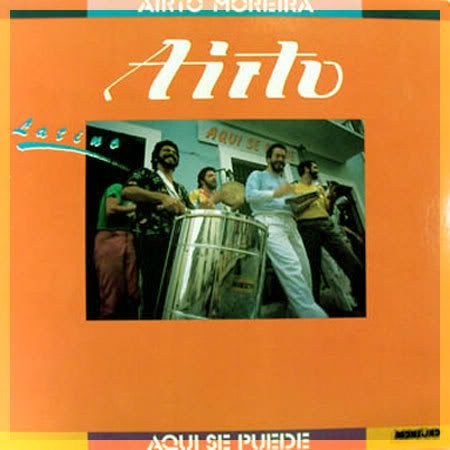
Airto Moreira - Latino Aqui Se Puede (1986)


1. Aque Se Puede
(Airto Moreira-Tite Curet Alonzo)
2. Sin Salida
(Ruben Rada-Hugo Fattoruso)
3. Jump

(Jeff Eliot)
4. The Return
(Kei Akagi)
5. Anatelio
[The Happy People]
(Airto Moreira)
6. Sete Sementes
(Geni Da Silva)
7. Tombo
(Airto Moreira-Flora Purim)


Airto Moreira,Flora Purim,Alphonso Johnson,Cachete Maldonado,Donaldo Alias,Frank Colon,Geni da Silva,Giovanni Hidalgo,Jeff Elliot,Joe Farrell,Jorge Dalto,Kei Akagi,Keith Jones,Larry Nass,Laudir de Oliveira,Oscar Castro Neves,Rafael Jose ,Raul de Souza,Tite Curet Alonso,Tony Moreno.

Thursday, 6 November 2008

Hubert Laws

Hubert Laws - Morning Star (1972)


1. Morning Star
2. Let Her Go
3. Where Is The Love
4. No More
5. Amazing Grace
6. What Do You Think Of This World Now?

Arranged By, Conductor - Don Sebesky
Bass - Ron Carter
Bassoon - Jack Knitzer
Cello - Charles McCracken , George Koutzen , Lucien Schmit
Drums - Billy Cobham
Engineer - Rudy Van Gelder
Flute, Flute [Alto], Clarinet - Phil Bodner
Flute, Flute [Alto], Piccolo Flute - Hubert Laws
Flute, Flute [Alto], Piccolo Flute, English Horn - Romeo Penque
French Horn - Jim Buffington
Guitar - John Tropea
Harp - Gloria Agostini
Percussion - David Friedman , Ralph MacDonald
Piano [Electric] - Bob James
Producer - Creed Taylor
Trombone - Garnett Brown
Trumpet, Flugelhorn - Alan Rubin , Marvin Stamm
Vibraphone - David Friedman
Violin - David Nadien , Elliot Rosoff , Emanuel Green , Gene Orloff , Harry Cykman , Harry Lookofsky , Irving Spice , Max Ellen , Paul Gershman
Vocals - Eloise Laws , Lani Groves , Tasha Thomas

B.B.King

B.B. King - Live by request (2003) DivX


01. Intro
02. Let The Good Times Roll
03. Let The Good Times Roll pt.2
04. Sweet Little Angel
05. Request
06. Bad case of love
07. Request
08. Night Life
09. Request
10. Neighborhood Affair
11. Exactly Like You
12. Request
13. Guess Who

14. Request
15. The Thrill Is Gone
16. Rock Me Baby
17. Key To The Highway
18. Request
19. When Love Comes To Town
20. Request
21. Caldonia
22. Request
23. I'll Survive
24. Request
25. Payin' The Cost To Be The Boss.

Monday, 3 November 2008

Hiram Bullock

Hiram Bullock - From All Sides (1986)


01. Window Shoppin'
02. Until I Do
03. Hark! The Herald Angels
04. Really Wish I Could Love You
05. Say Goodnight, Gracie
06. Funky Broadway
07. Mad Dog Daze
08. Cactus
09. When The Passion Is Played


Michael Brecker - Sax (Tenor), Soloist
Delmar Brown - Keyboards, Vocals (bckgr)
Hiram Bullock - Guitar (Acoustic), Guitar, Guitar (Electric), Keyboards, Vocals (bckgr), Guitar (Synthesizer), Producer, Lead
Cliff Carter - Synthesizer, Keyboards, Synthesizer Programming
Crispin Cioe - Sax (Alto), Sax (Baritone)
Nicholas DiFrisco Programming, Vocals (bckgr), Clapping, Drum Programming
Dr. Gibbs - Percussion
Charley Drayton - Drums, Vocals (bckgr)
Doug Epstein - Programming, Effects Programming
Bob Frank - Trombone
Arno Hecht - Sax (Tenor)
Fred Kelly - Vocals (bckgr), Clapping
Kenny Kirkland - Piano, Keyboards, Vocals (bckgr), Soloist
Mike Krowiak - Programming, Vocals (bckgr), Clapping, Effects Programming
Will Lee - Synthesizer, Bass, Vocals (bckgr)
Hollywood Paul Litteral - Trumpet
David Sanborn - Sax (Alto)
Kaz Silver-Lee - Vocals (bckgr)


Hiram Bullock's Warner Bros. debut as a leader is a mixed bag. Bullock was, upon arrival, already an expert session guitarist and producer when he cut this set. (One of the jewels in his crown is Mike Stern's first album as a leader, the almighty Neesh, which was released only in Japan and has never seen the light of day on American shores.) This self-produced set includes eight Bullock originals plus a nice reading of Don Grolnick's "Cactus." The band features many of the same musicians Bullock still works with: drummer Charley Drayton, bassist Will Lee, and Cliff Carter on keyboards, as well as some stellar guest appearances by the late Kenny Kirkland and saxophonist David Sanborn. Bullock has never really considered himself a jazz artist -- and it doesn't matter, ultimately. What is here is an uneven yet enjoyable collection of tunes featuring his understated guitar work, his skill in creating something that embodied what was considered "smooth" or contemporary jazz at the time, his excellent pop sensibility in which vamps and hooks are key, and his ability to get what he wanted at the time from a recording studio. Bullock's voice has always been flat and rather emotionless, so that's annoying, but it will always be, and so is the dated-sounding production, which was probably state-of-the-art at the time. Bullock's "Funky Broadway" is the clear winner on this set, with an expanded horn section that includes Michael Brecker and the Uptown Horns. Other notables are the opener, "Window Shoppin'," with its smoking guitar vamp, and the aforementioned "Cactus," which is a classic tune any way you cut it. While Way Kool, recorded in 1992, is a better bet, this is by no means unworthy, and fans of Bullock's signature style both as a guitarist and songwriter are in full evidence on From All Sides.

Jeff Beck

Jeff Beck - Jeff Beck Group (1972)


1. Ice Cream Cakes (Album Version)
2. Glad All Over (Album Version)
3. Tonight I'll Be Staying Here With You (Album Version)
4. Sugar Cane (Album Version)
5. I Can't Give Back The Love I Feel For You (Album Version)
6. Going Down (Album Version)
7. I Gotta Have A Song (Album Version)
8. Highways (Album Version)
9. Definitely Maybe (Album Version).


Max Middleton:Keyboards
Cozy Powell:Drums

Clive Chaman:Bass
Bobby Tench:Vocals

Jeff Beck:Guitars.


As most everyone knows who lived through the wonderfully creative period of rock music that lasted from 1964 through, approximately, 1975, there were only about a handful of critics who had credibility in terms of being able to review and critique music, in any genre, adequately during said period. Most critics bashed this release as being "Over the top" and criticized Cropper for being out of his depth as a producer here. There was much made (Negatively) of Beck's choice of material and his guitar arrangements on this record. Personally, as a player for over 30 years myself, I think this CD offers some of his most inspired and lyrical playing, and I have listened to just about everything that Beck has released over the last 35 years. The tones he is getting out of his strat during numbers like "Going Down", "Ice Cream Cakes", "I Can't Give Back The Love I Feel For You", "Highways" and "Definitely Maybe" are unlike anything he had ever done up to that point and, quite frankly, unlike anything he has done since. His sense of dynamics, harmonics and innovative phrasing are astonishing here for a record that was made in 1972. His command of both right and left-hand techniques is truly awesome as well. You hear Beck two-hand tapping here six years before Eddie Van Halen was doing it in clubs in Pasadena. You hear multi-layered electric guitars, electric sitars and acoustics (Although Sparingly) beautifully performed and mixed. Beck's slide playing is inspirational here as well, as is his wah-wah touch. Granted, the songs aren't singer/songwriter classics for the most part, but the reason you want to own this CD is for Beck's truly inspired and, at times, truly demented playing (Which is a good thing!).
I think Cropper's production is solid and Ron Capone engineered the tracks with a good understanding of what he was dealing with.
In Beck's Group, Max Middleton's keyboard playing is as good as it gets in this genre and Cozy Powell lays a decent groove and plays with authority when needed.
However, it is Beck who truly shines here.
Just like the critics who chastised Miles for his early to mid 70's forays into Acid Funk, all of a sudden there is a renewed interest by those same critics in that music today as being ahead of it's time and visionary. The same can be said for Beck's explosive and jaw dropping display here. When re-examined, I think many critics who blasted this release in '72 will now acknowledge that these guitar arrangements and performances by Beck are quite unlike anything from that era - controlled chaos and mayhem by a master reaching to push his own creative envelope beyond what anyone was doing at that time. For Beck fans or, more importantly, guitar fans in general, this CD is a must have. Enjoy!(M. White)

Sunday, 2 November 2008

Return to Forever

Return to Forever


Return to Forever From Wikipedia, the free encyclopedia

Return to Forever was the name of a jazz fusion band founded and led by keyboardist Chick Corea. The band cycled through many members, with only consistent band mate of Corea's bassist Stanley Clarke. Along with Weather Report and Mahavishnu Orchestra, Return to Forever is often seen as the core of jazz fusion music in the 1970s. Several musicians, including Clarke, Flora Purim, Airto Moreira and Al Di Meola first became well-known through their performances on Return to Forever's albums.

After playing on Miles Davis's albums In a Silent Way and Bitches Brew, Corea formed an avant-garde jazz band called Circle with Dave Holland, Anthony Braxton and Barry Altschul. However in 1972, after becoming a disciple of Scientology, Corea decided that he wanted to "communicate" with the audience. This essentially meant that he wanted to make more commercial music, since avant-garde jazz had a relatively small audience.


* 1 The first line-up (1972 - 1973)
* 2 The jazz-rock era (1973 - 1976)
* 3 The last album (1977)
* 4 Reunion (2008)
* 5 Discography
o 5.1 Studio albums
o 5.2 Live releases
o 5.3 Collections
* 6 Personnel
* 7 References
* 8 External links

The first line-up (1972 - 1973)

The first Return to Forever band played latin-oriented music. The initial band consisted of singer (and occasional percussionist) Flora Purim, her husband Airto Moreira on drums and other percussion, Corea's longtime musical co-worker Joe Farrell on saxophone and flute, and the young bassist Stanley Clarke. Especially in this first line-up, Clarke played double bass in addition to electric bass. Corea's electric piano was the leading instrument in this group's sound, but Clarke and Farrell were also given plenty of solo space. Purim's vocal gave some commercial appeal for their music, but many compositions were instrumental and more or less experimental in their nature. The music was composed by Corea with the exception of the title track of the second album which was written by Stanley Clarke. Lyrics were often written by Corea's friend Neville Potter, and were often related to scientology, though this is not necessarily easy to recognize for outsiders. Clarke was involved in Scientology through Corea, but left the church in the early 1980s.

The first album, named simply Return to Forever, was cut for ECM Records in 1972 and was initially released only in Europe. This album featured Corea's famous compositions Crystal Silence and La Fiesta. Shortly afterwards, Corea, Airto, Clarke and Tony Williams formed the band for Stan Getz's album Captain Marvel (1972), which featured Corea's compositions including some from the first and second Return to Forever albums. The second album, Light as a Feather (1973), was released by Polydor and included the famous song, Spain.

The jazz-rock era (1973 - 1976)

After the second album, Farrell, Purim and Moreira left the group in order to set up their own band. Guitarist Bill Connors, drummer Steve Gadd and percussionist Mingo Lewis were taken on. However, Gadd was not willing to go touring and leave his job as a hard working studio drummer. Lenny White (who had played with Corea in Miles Davis's band) replaced Gadd and Lewis, and the group's third album, Hymn of the Seventh Galaxy (1973), was rerecorded. The first recording featuring Gadd was never released and is said to be missing.

The nature of the group's music had now completely changed to "jazz-rock", similar to what The Mahavishnu Orchestra and some progressive rock bands were doing at the same time. The music was still relatively melodic, relying on strong themes, but traditional jazz feel was almost completely gone. Distorted guitar had become prominent in the band's new sound, and Clarke played mostly electric bass. A new singer had not been hired, and all the songs were now instrumentals. This however, did not lead to a decrease in the band's commercial success - Return to Forever's jazz-rock albums always found their way to US pop album charts.

The second jazz-rock album, Where Have I Known You Before, (1974) was similar in style to the previous album, but Corea played synthesizers in addition to electric piano, and Clarke had developed his famous electric bass sound and style. Since Bill Connors had wanted to concentrate on his solo career, the group had also hired a new guitarist. Earl Klugh played guitar on some group's live performances but he was soon replaced by the 19 year old guitar wizard Al Di Meola, who played guitar on the album.

The next album, No Mystery (1975), was made with the same line-up as its predecessor, but the style of music was more varied. The first side of the record consisted mostly of jazz-funk, while the second side featured Corea's acoustic title track and a long composition that borrowed partly from Spanish music. On this and the following album, each member of the group composed at least one of the tracks. No Mystery won the Grammy Award for Best Jazz Performance by a Group.

The last album by the most long-lasting lineup of Return to Forever was Romantic Warrior (1976). By this time the group had left Polydor for Columbia Records. The album became the best selling of all Return to Forever albums, eventually reaching gold disc status. This album continued experiments in the realm of jazz-rock and related genres, and is also famous for its technically demanding playing.

After "Romantic Warrior" and its subsequent tour, after signing a multi-million dollar contract with CBS and to the surprise of the rest of the band, Chick Corea decided to change the lineup of the group without White and di Meola.[1]

The last album (1977)

The final version of Return to Forever featured a four piece horn section and Corea's wife Gayle singing vocals, and recorded just one studio album, Musicmagic (1977). The music had returned closer to the gentle feel of the music of the first line-up. However, instead of strong Latin influences, the last album features bombastic arrangements for horn section and synthesizers. Compositions remained relatively complex.

After Musicmagic, Chick Corea officially disbanded the group. Reasons are speculative, but Stanley Clarke's leaving the Church of Scientology is believed to be a factor. In the years following the breakup, Al di Meola commented on the complications of reuniting the di Meola/White lineup "I think we have a Scientology problem to deal with, possibly due to Stanley leaving Scientology. That doesn't sit very well with Chick."[2]

In 1983 the White/Di Meola line up returned briefly on the stage, but did not record a new album, only one track issued on Corea's Touchstone album entitled "Compadres".

Reunion (2008)

According to Lenny White,[3] Return to Forever will reunite to play shows throughout the U.S. starting in summer 2008, and move the tour to Europe in 2009. The possibility of recording a new album at the end of 2008 is also in the works. A special Return to Forever anthology set, featuring remixed and remastered tracks from the albums Hymn of the Seventh Galaxy, Where Have I Known You Before, No Mystery, and Romantic Warrior, will be released to coincide with the tour.[4] According to Chick Corea, a concert DVD is much more likely than a new studio recording.[5]

Discography

Studio albums

* Return to Forever (1972, ECM)
* Light as a Feather (1972, Polydor)
* Hymn of the Seventh Galaxy (1973, Polydor)
* Where Have I Known You Before (1974, Polydor)
* No Mystery (1975, Polydor)
* Romantic Warrior (1976, Columbia)
* Musicmagic (1977, Columbia)

Live releases

* Live (1977; later re-released in 1999 as Live: The Complete Concert)

Collections

* Best of Return to Forever (1980)
* Return to the Seventh Galaxy: The Anthology (1996, covers years 1972-1975)
* This Is Jazz, Vol. 12 (1996, covers only last two albums)
* Return to Forever: The Anthology (2008)

Personnel
Return to Forever Band Members (1972-1973)

* Chick Corea - keyboards
* Flora Purim - vocals
* Joe Farrell - saxophone
* Stanley Clarke - bass
* Airto Moreira - percussion

(1973)

* Chick Corea - keyboards
* Bill Connors - guitar
* Stanley Clarke - bass
* Steve Gadd - drums
* Mingo Lewis - percussion

(1973)

* Chick Corea - keyboards
* Bill Connors - guitar
* Stanley Clarke - bass
* Lenny White - drums

(1974)

* Chick Corea - keyboards
* Earl Klugh - guitar
* Stanley Clarke - bass
* Lenny White - drums

(1974-1976)

* Chick Corea - keyboards
* Al Di Meola - guitar
* Stanley Clarke - bass
* Lenny White - drums

(1977)

* Chick Corea - keyboards
* Gayle Moran - vocals, keyboards
* Joe Farrell - saxophone
* John Thomas - trumpet
* James Tinsley - trumpet
* Jim Pugh - trombone
* Harold Garrett - trombone
* Stanley Clarke - bass
* Gerry Brown - drums

(1977)

* Chick Corea - keyboards
* Gayle Moran - vocals, keyboards
* Joe Farrell - saxophone
* John Thomas - trumpet
* James Tinsley - trumpet
* Jim Pugh - trombone
* Harold Garrett - trombone
* Ron Moss - trombone
* Stanley Clarke - bass
* Gerry Brown - drums

(1977 - 1982)

BAND SPLIT
(1983)

* Chick Corea - keyboards
* Al Di Meola - guitar
* Stanley Clarke - bass
* Lenny White - drums

(1984 - 2007)

BAND SPLIT
(2008)

* Chick Corea - keyboards
* Al Di Meola - guitar
* Stanley Clarke - bass
* Lenny White - drums.


Return to Forever
De Wikipedia, la enciclopedia libre

Return to Forever fue una banda de Jazz Rock creada hacia fines de 1971 y liderada por el pianista Chick Corea.

* 1 Primera formación
* 2 Nuevo rumbo
* 3 Tercera formación
* 4 Epílogo

Primera formación

Su primera formación estaba integrada por el mencionado Chick Corea en teclados, Stanley Clarke en bajo, Joe Farrell en saxo soprano y flautas y Airto Moreira en la percusión. La esposa de Airto, Flora Purim, ejerció el trabajo vocal de la banda.

Tras un tiempo de experimentación, en febrero de 1972 graban su primer álbum, titulado con el mismo nombre del grupo, en el que se incluyó la célebre composición de Corea llamada La Fiesta. En septiembre de ese mismo año graban Light as a Feather, un compilado de melodías brasileras reinterpretadas desde las influencias del Jazz al que venía apuntando el grupo.

Nuevo rumbo

Sin embargo, en los primeros meses de 1973 Return to Forever toma un rumbo diferente. Al incorporarse el guitarrista Bill Connors y el enérgico baterista Lenny White, el grupo se lanza de lleno al Jazz fusión, y en ese mismo año, en agosto, graban Hymn of the Seventh Galaxy, el cual lo transporta hacia el reconocimiento general como uno de los máximos exponentes del movimiento del Jazz Rock, junto a Mahavishnu Orchestra y Weather Report.

En dicha línea musical, en el verano de 1974 se suma a Return to Forever, para reemplazar a Connors, el jóven y virtuoso guitarrista Al Di Meola, con fuertes influencias flamencas recibidas de Paco de Lucía. Con esta incorporación el grupo encontró su momento de máxima creatividad y calidad, grabando varios trabajos que fueron, en todos los casos, fieles exponentes de la energía y plenitud del Jazz Rock, representado de manera inconfundible con esta banda.

Así es que graban, en 1974, Where have I known you before; en 1975 No Mystery; y en 1976 el paradigmático Romantic Warrior, considerado por algunos críticos como su obra maestra.

Tercera formación

Una tercera edición del grupo Return to Forever surgió en 1977, al incorporarse nuevos músicos auxiliares en vientos, el percusionista Gerry Brown y la por entonces futura nueva esposa de Corea, Gayle Moran, en la voz. Esta nueva formación grabó el álbum Music magic, y el cuádruple Return to Forever Live, el cual refleja la tremenda energía de la banda en sus perfomances en vivo, y consituye su última grabación antes de la disolución del grupo.

Epílogo

Transcurridos más de veinte años, en 1999, Stanley Clarke junto al baterista Lenny White, ex miembros de la banda, deciden convocar a otros músicos de renombre, tales como el guitarrista Richie Kotzen, la teclista Rachel Z, y la multifacética y virtuosa violinista Karen Briggs, con el objeto de formar el grupo Vertú, considerado por algunos críticos como la continuación musical de Return to Forever.

Return to Forever - Light as a Feather (1972)

1 - You're Everything
2 - Light as a Feather
3 - Captain Marvel
4 - 500 Miles High
5 - Children's Song
6 - Spain.


Stanley Clarke - Bass
Chick Corea - Keyboards, Piano (Electric), Engineer
Joe Farrell - Flute, Sax (Soprano), Sax (Tenor)
Airto Moreira - Percussion, Drums, Vocals
Flora Purim - Percussion, Vocals.


Of the three versions of Return to Forever, the initial version is of the greatest interest from the jazz standpoint. With Joe Farrell on reeds, bassist Stanley Clarke, Airto on drums and percussion and Flora Purim contributing vocals, this contingent was one of the finest groups of the 1972-73 period even if they only actually cut two records. This particular set includes the original version of Chick Corea's greatest composition ("Spain") along with versions of "500 Miles High" and "Captain Marvel." This music crosses many boundaries and still sounds fresh two decades later.
Leon Thomas

Leon Thomas Album (1970)


BAGS GROOVE
COME ALONG
I AM
PHAROAHS TUNE(THE JOURNEY)
UM UM UM.


Billy Cobham - Drums
Bob Cunningham - Bass
Gene Golden - Percussion
Billy Harper - Sax (Tenor)
Roy Haynes - Drums
Howard Johnson - Sax (Baritone)

Richard Landrum - Percussion
Sonny Morgan - Percussion

Oliver Nelson - Arranger, Conductor
Jerome Richardson - Sax (Alto)
Ernie Royal - Trumpet
Donald Smith - Flute
James Spaulding - Flute
Arthur Sterling - Piano
Leon Thomas - Flute, Percussion, Vocals
John Williams - Guitar (Bass).


On the follow-up to the mind-blowing Spirits Known and Unknown, singer, multi-instrumentalist, arranger, and composer Leon Thomas decided to take a different track. Far from the sparely orchestrated ensembles of the previous works, Thomas loaded this set with jazz luminaries such as Roy Haynes and Billy Cobham, Billy Harper, Donald Smith, James Spaulding, Sonny Morgan, Ernie Royal, and many others as well as a backing chorus of female voices. Side one is the up-tempo jazz ride, as Thomas and company rip through a host of his own tunes, such as the scatted post-bop of "I Am" and the nearly bar-walking blues of "Come Along." But the side is graced by an absolutely stunning read of Milt Jackson's "Bag's Groove," with Harper leading a five-horn section. The real gem on the album is "Pharaoh's Tune (The Journey)," which comprises all of side two. After setting up a live audience with a narrative laced with sound effects from the vanguard jazzers, the tune develops its groove about four minutes in and the bells and yodel come out, and from here it's Thomas at his improvisational best as both a singer and a bandleader. Everybody here is inspired, especially the two drummers. Harper, Spaulding, and Smith weave snake-charming lines around one another, and the entire thing just lifts off and never returns. It's a breathtaking ride made all the more so by the long, jazzed-out setup of side one. Why this guy wasn't huge is a mystery. ~ Thom Jurek, All Music Guide

Saturday, 1 November 2008

Curtis Mayfield

Curtis Mayfield - Back to the World (1973)


1 - Back to the World
2 - Future Shock
3 - Right on for the Darkness
4 - Future Song (Love a Good Woman, Love a Good Man)
5 - If I Were Only a Child Again
6 - Can't Say Nothin'
7 - Keep on Trippin'


Back to the World, the first album Curtis Mayfield recorded and released after hitting number one with the intense inner-city vignette Superfly, returned him to a steady balance of optimism for the future and direct social commentary regarding the problems of his people. The lead single, "Future Shock," was inspired by Alvin Toffler's 1970 book of the same name, which warned readers that industrial society was changing so radically that environmental and social problems could be endemic for decades. The track tapped into the same grooves and brass heard on Superfly (perhaps overly so), but said more about the world around ("We got to stop all men, from messing up the land/When won't we understand, this is our last and only chance?"). The title track was very upbeat and positive, as were the refreshing "If I Were Only a Child Again" and "Future Song (Love a Good Woman, Love a Good Man)." With no hit singles to even approach the three high performers from Superfly, though, Back to the World was a distinct disappointment; the music wasn't as powerful as fans were expecting, and though the songs were up to Mayfield's usual high standards, there were many similarities (musically and thematically) to material from each of his proper solo albums.

Ara Tokatlian y Enrique Mono Villegas

Ara Tokatlian y Enrique Mono Villegas - Inspiraciòn (1975)


1 - Camino a Samarkanda
2 - Sombra de los Dorados Budas
3 - En la ola de tus Ojos
4 - Maritimaria
5 - Danara
6 - Logre Mi Ser.


Enrique Villegas (Mono Villegas)
Enrique Mono Villegas fue un pianista argentino de jazz. Nació en Buenos Aires el 3 de agosto de 1913, casualmente en la misma manzana que Adolfo Ábalos (1914, pianista folclórico) y Aníbal Troilo (bandoneonista de tango, 1914-1975). Falleció en la misma ciudad el 11 de julio de 1986.

Su padre fue dentista, escribano, abogado y después dejó todo para dedicarse a criar gallos de riña. Su madre murió joven, de un ataque cerebral, cuando Enrique tenía seis meses. Como lo criaron unas tías, decía haber hecho “todo lo que se me dio la gana, toda mi vida”. El Mono creía que su vida había terminado a los 7 años. Desde entonces sólo se había dedicado a tocar el piano y a leer. A esa edad, ya tocaba Mozart correctamente. Fue anotado en el conservatorio al mismo tiempo que en el colegio primario. Su descubrimiento del jazz llegó poco después, a los nueve años; tenía mucha imaginación, que en el jazz es una materia prima imprescindible.

El compositor Alberto Williams, que le permitió ejecutar todos los géneros, le brindó su primera instrucción musical. Esta formación sería importante para su futuro, ya que sus años tempranos lo encuentran incursionando en la música clásica, folclórica y en el tango. Estas raíces nunca dejarán de hacerse presentes aun cuando luego abrazara el jazz. Llegó hasta el cuarto año del Colegio Nacional Mariano Acosta donde dejaba las clases para ir a estudiar piano.

Era “un tipo inteligente, músico de raza y de nacionalidad pianista”, decía de sí mismo. En 1932 estrenó el Concierto para piano y orquesta de Ravel, en el teatro Odeón de Buenos Aires. Por esa misma época descubrió a quien él reconoce como sus “maestros espirituales”: Art Tatum, Fats Waller, Duke Ellington y Louis Armstrong. Aunque luego incorporaría otras influencias (Thelonious Monk y Bill Evans, entre ellas), tanto su estilo como su repertorio quedarían marcados para siempre por la impronta de estos cuatro grandes.

En 1932 estrena en el Consejo Nacional de Mujeres la versión original de la Rhapsody in blue de George Gershwin.
Alrededor del año 1935 realizó su primer trabajo en el Alvear Palace y en radio El Mundo.
En 1941 estrena de su Jazzeta, primer movimiento, con Carlos García de solista y los mejores músicos de jazz de ese momento.
En 1943 forma el Santa Anita Sextet con Juan Salazar en trompeta, Chino Ibarra en saxo tenor, Panchito Cao en clarinete, Tito Krieg en bajo y Adolfo Castro en batería.
En 1944 forma el combo Los Punteros, con Juan Salazar en trompeta, Bebe Eguía en saxo tenor, Jaime Rodríguez Anido en guitarra, Nene Nicolini en contrabajo y Pibe Poggi en batería.
En 1949 ingresó como pianista para el dúo Martínez-Ledesma, en reemplazo de Horacio Salgán. Aprendió a tocar música criolla.
En 1953 escribió la música para Un tranvía llamado deseo de Tennessee Williams, que estrenó en el teatro Casino la compañía de Mecha Ortiz.
Grabó para discos Music Hall, música criolla con guitarra y bombo (zambas, chacareras, gato (mús, vidalas, etc., de los hermanos Ábalos) y temas de jazz con Méndez en contrabajo y Poggi en batería. Ganó la copa Mundo Radial como solista favorito del Bob Club, del cual fue socio fundador.
En 1955 viajó a Nueva York donde grabó para Columbia Records con Milt Hilton en bajo y Cozy Cole en batería. Le propusieron entonces grabar temas del compositor cubano Ernesto Lecuona y él no aceptó. Se dedicó a mirar películas, a tocar en pequeños lugares y a frecuentar a los músicos jazzeros Cole Porter, Count Basie, Nat King Cole y Coleman Hawkins.
En 1957, en Cleveland, escuchó por primera vez a Duke Ellington. “Gracias a él, empecé en el jazz”, decía. Y aseguraba sentirse identificado porque “jamás repetimos la música aunque toquemos los mismos temas. Estamos convencidos de que el jazz, como la conversación, debe ser espontáneo”.
En 1958 tocó durante el Festival Casals en la Universidad de Río Piedras (Puerto Rico).
En 1973 grabó el disco de sus 60 años en el Teatro Municipal General San Martín y en 1974 volvió a tocar la Rhapsody in blue en el club Vélez Sarsfield, ante 20 000 espectadores. En 1975 tocó en solo de piano un repertorio de jazz en el Teatro Colón de Buenos Aires.
Hombre de una cultura rica y variada que abrevaba tanto en los libros como en la calle, Villegas cultivó amistades como los escritores Jorge Luis Borges y Macedonio Fernández, el pintor Xul Solar y el bandoneonista Ástor Piazzolla, quien le dedicó el tema Villeguita. Contra lo que muchos suponen, su vida fue austera y ordenada.

Ara Tokatlian
Ara Tokatlian naciò el 2 de junio de 1951, en Egipto es un músico egipcio-argentino, fundador e integrante de la banda Arco Iris.

Ara Tokatlian fue uno de los fundadores junto a Gustavo Santaolalla de la legendaria banda Arco Iris, una de las iniciadoras del rock nacional argentino. Cuando Santaolalla se alejó de la banda en 1976, Ara Tokatlian y Danais Winnycka (Dana), maestro y guía espiritual del grupo se traladaron a California donde continuaron con Arco Iris, con una nueva integración, formando una comunidad de vida. Allí instalaron también un estudio de grabación llamado Danara.
En 1983, Ara y Dana se casaron en Nueva York. En 2003 Dana falleció en México y Ara entró en una profunda depresión. En 2006, Ara publicó en el sitio rock.com.ar una carta abierta, sobre la muerte de Dana y su significado.

Wes Montgomery

Wes Montgomery - Down Here On The Ground (1968)


01. Wind Song
02. Georgia On My Mind

03. The Other Man's Grass Is Always Greener
04. Down Here On The Ground
05. Up And At It
06. Goin' On To Detroit
07. I Say A Little Prayer For You
08. When I Look In Your Eyes
09. Know It All
10. The Fox


Wes Montgomery (guitar)
Herbie Hancock (piano)

Mike Mainieri (vibraphone)
Ron Carter (bass)
Hubert Laws (flute)
Grady Tate (drums)
Ray Barretto (percussion)
Bobby Rosengarden (percussion)


Wes Montgomery - Down Here On The Ground


"...during 1964-1966 he recorded an interesting series of mostly orchestral dates with arranger Don Sebesky and producer Creed Taylor. These records were generally a good balance between jazz and accessibility, even if the best performances were small-group outings with either the Wynton Kelly Trio or Jimmy Smith.
In 1967 Wes signed with Creed Taylor at A&M and during 1967-1968 he recorded three best-selling albums that found him merely stating simple pop melodies while backed by strings and woodwinds. His jazz fans were upset, but Montgomery's albums were played on AM radio during the period. He helped introduce listeners to jazz, and his live performances were as freewheeling as his earlier Riverside dates."
"By the last year of his life, Montgomery was a pop star, and there is precious little jazz on these chart-oriented sessions for Herb Alpert's label. The familiar parallel octaves are there in plenty, but Montgomery does little more than register the melody, repeat it with some slight elaboration, negotiate a middle eight as straightforwardly as possible, and then on out to a faded ending."